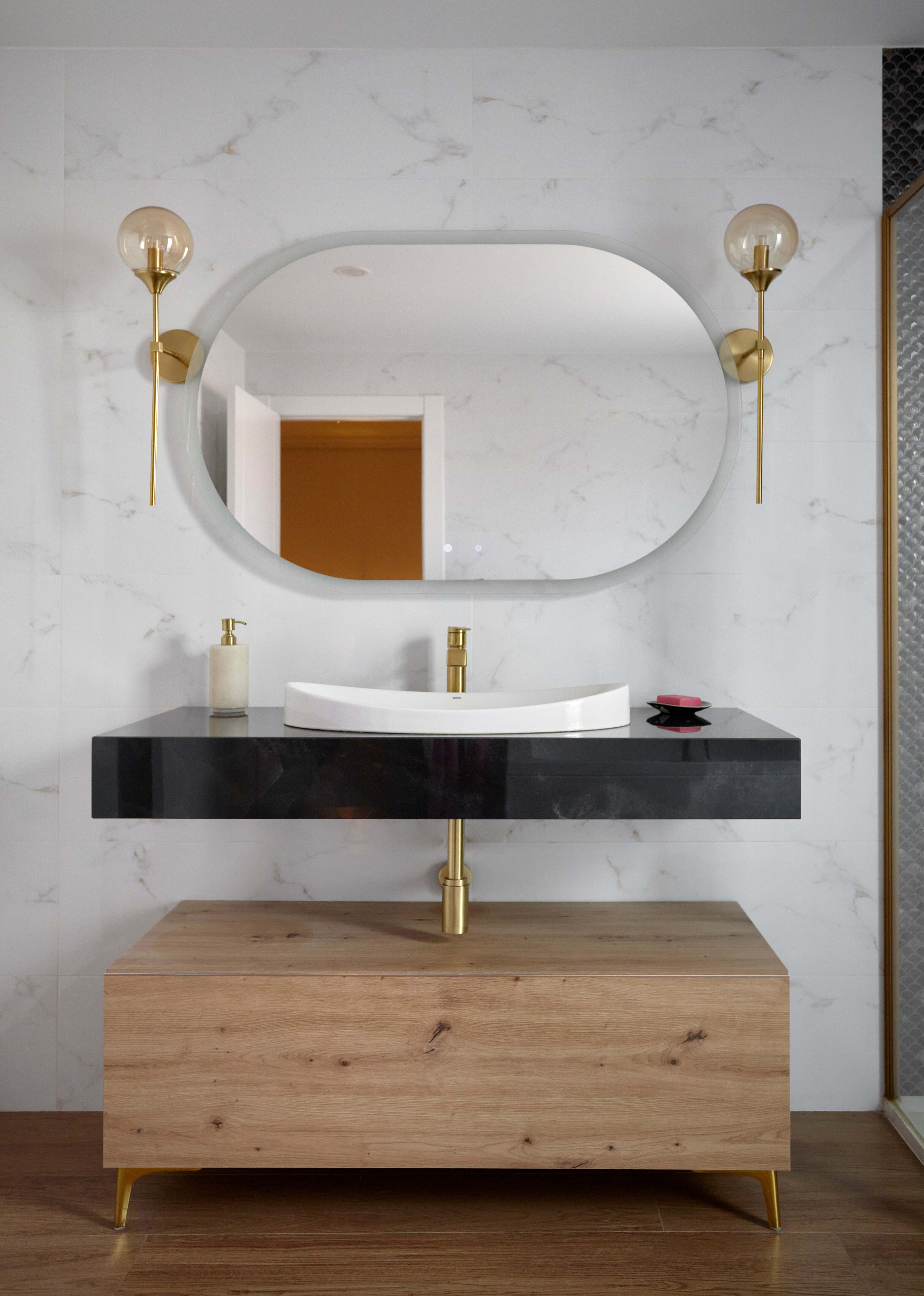

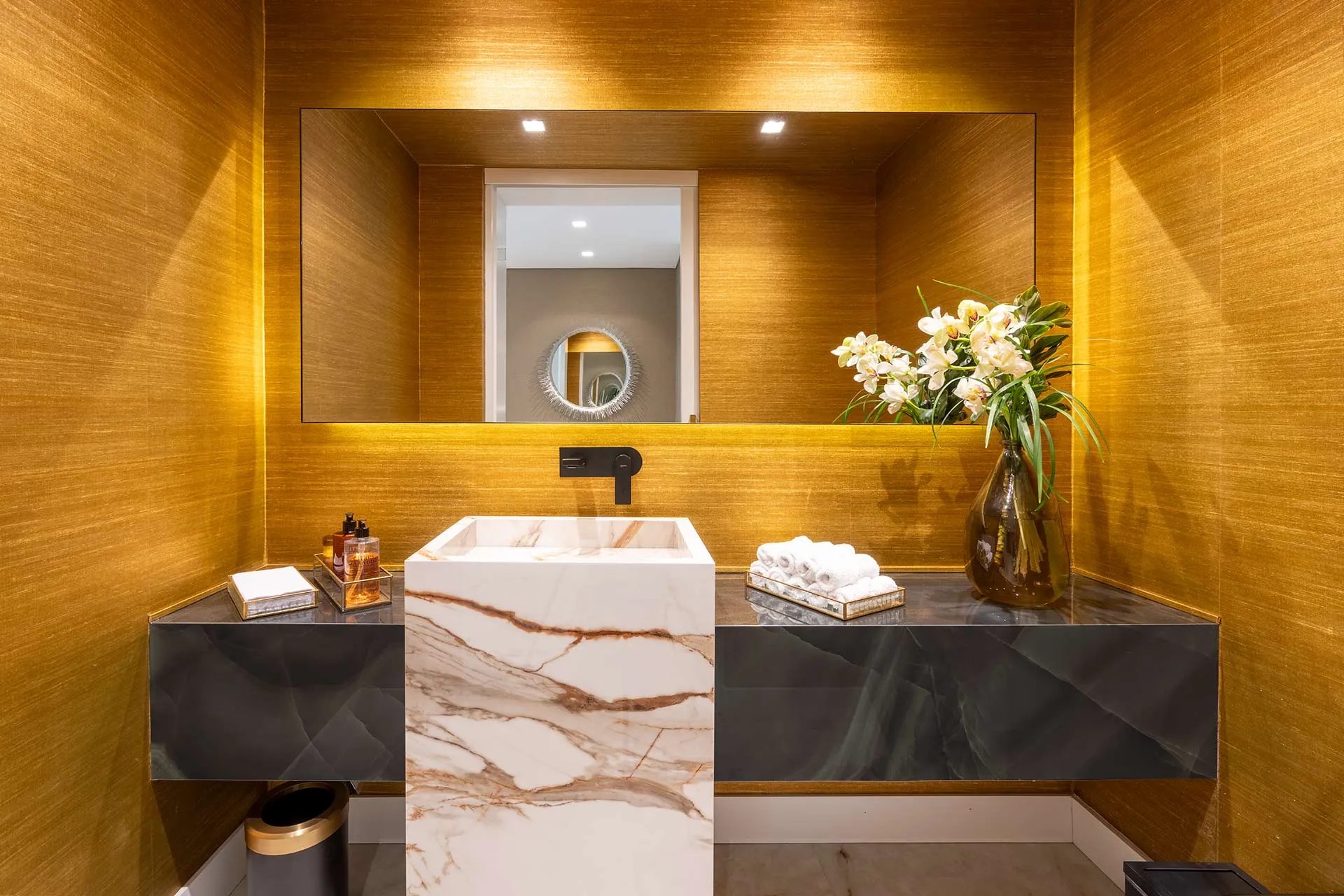
The bathroom is no longer a purely functional space, but has become one of the most important rooms in the home.
In 2026, bathroom design trends will focus on creating calm environments, using natural materials, careful lighting, and solutions that transform the bathroom into a true haven of well-being.
1. Trending colors for bathrooms in 2026: warm, natural tones
The reign of clinical white and cool grays has come to an end. The color palettes of 2026 are inspired by nature: sand, beige, terracotta, olive green, dusty pink, and soft browns create enveloping, warm, and balanced environments. These tones bring serenity and softness, and can be combined with deeper accents to add character without overwhelming.
2. Trending materials: large-format porcelain tiles
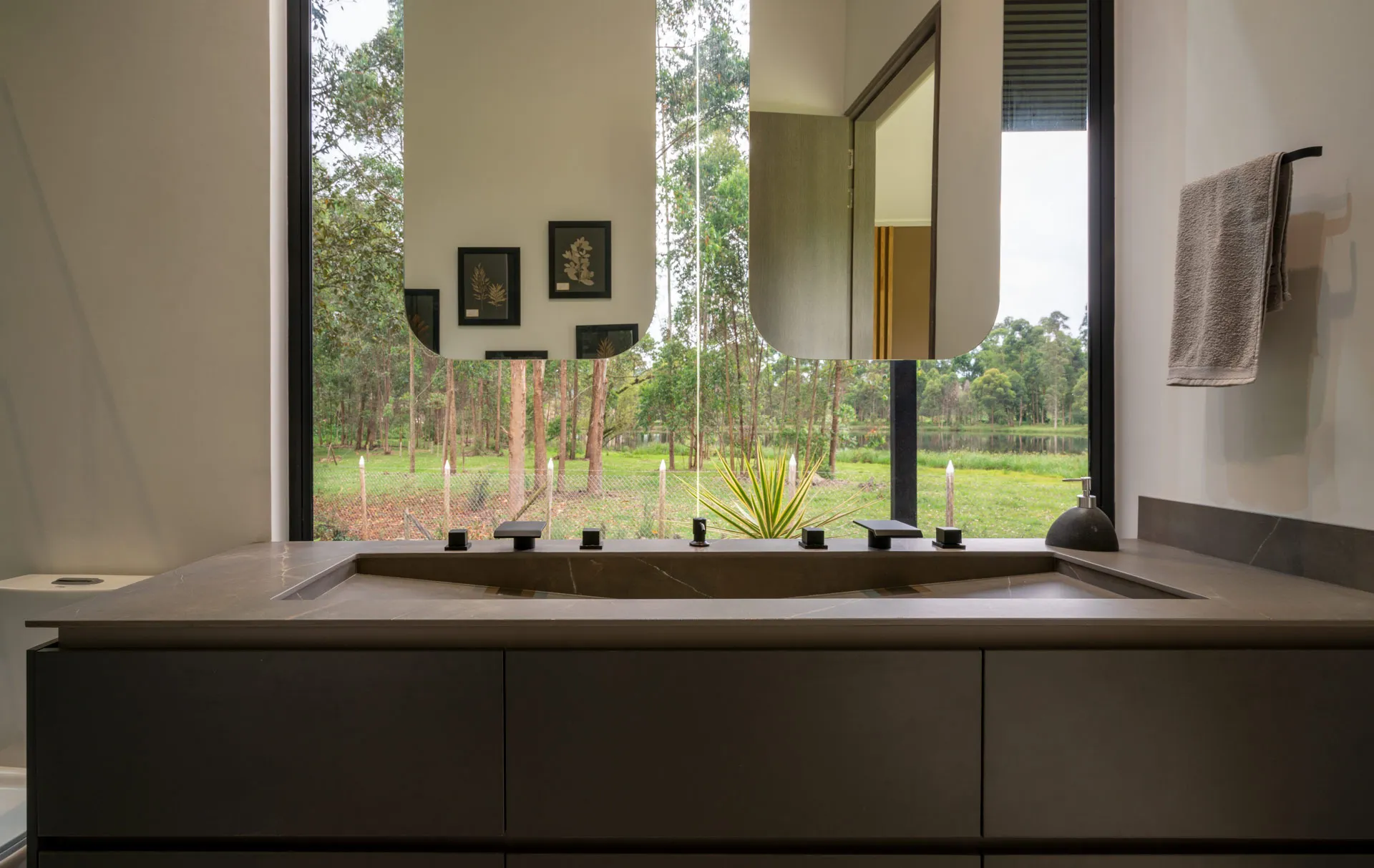
Today’s bathrooms seek textures that feel as good as they look. Large surfaces, matte finishes, and softly embossed materials are replacing small tiles and overly shiny options. Large-format porcelain tiles help create cleaner, more uniform, and visually calming spaces.
This approach is not only aesthetically appealing, but also simplifies maintenance and enhances the sense of visual cohesion.
3. Spa-style bathrooms: the big trend in design
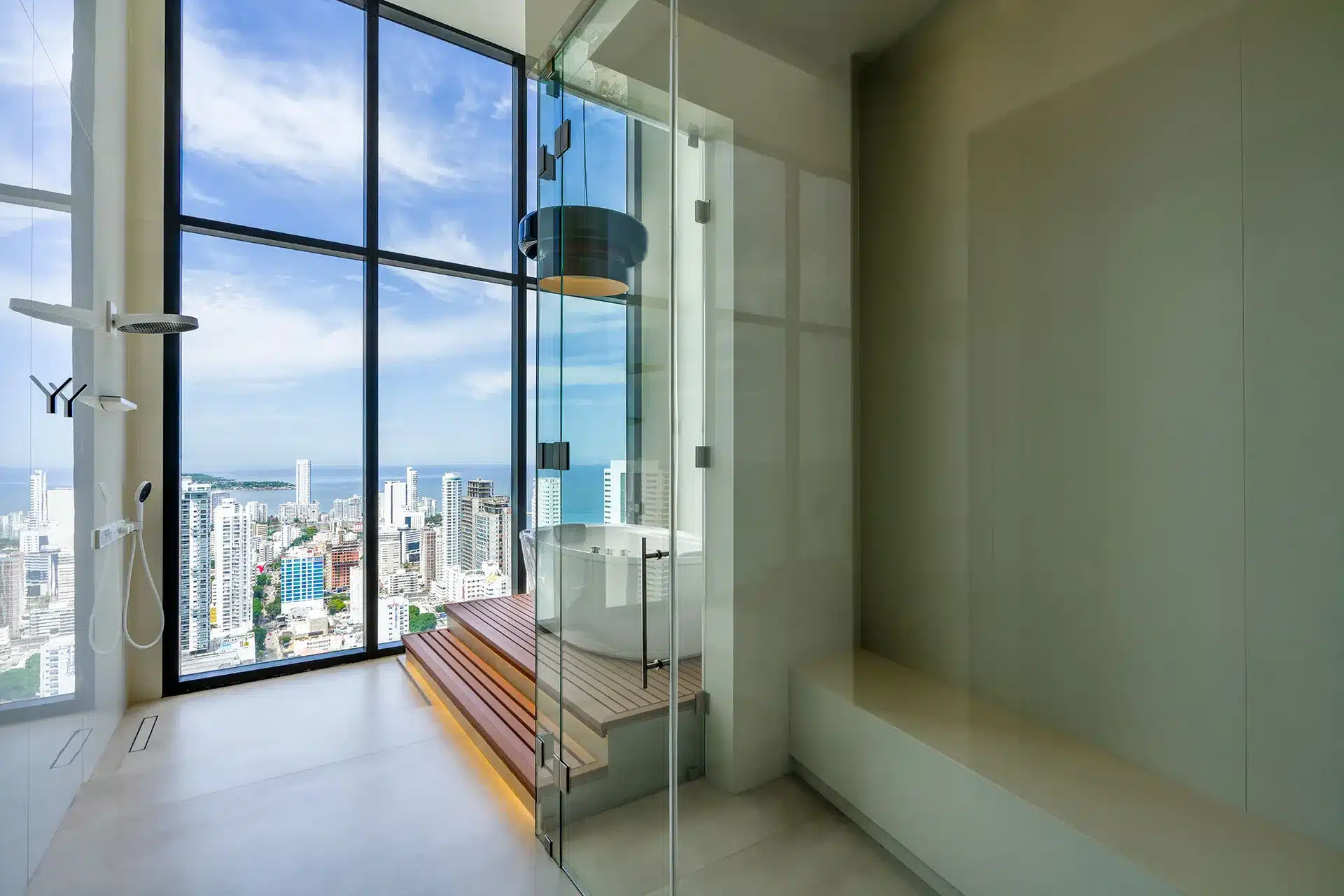
This year, the bathroom is being transformed into a spa-like space within the home. Current designs incorporate elements inspired by luxury hotels: walk-in showers, rain showerheads, warm lighting, elegant faucets, and natural materials that promote calm.
The idea is to create a complete sensory experience, where light, textures, and water contribute to making the bathroom an ideal place to relax and unwind every day.
4. Integrated design: cleaner, more spacious bathrooms without visual clutter
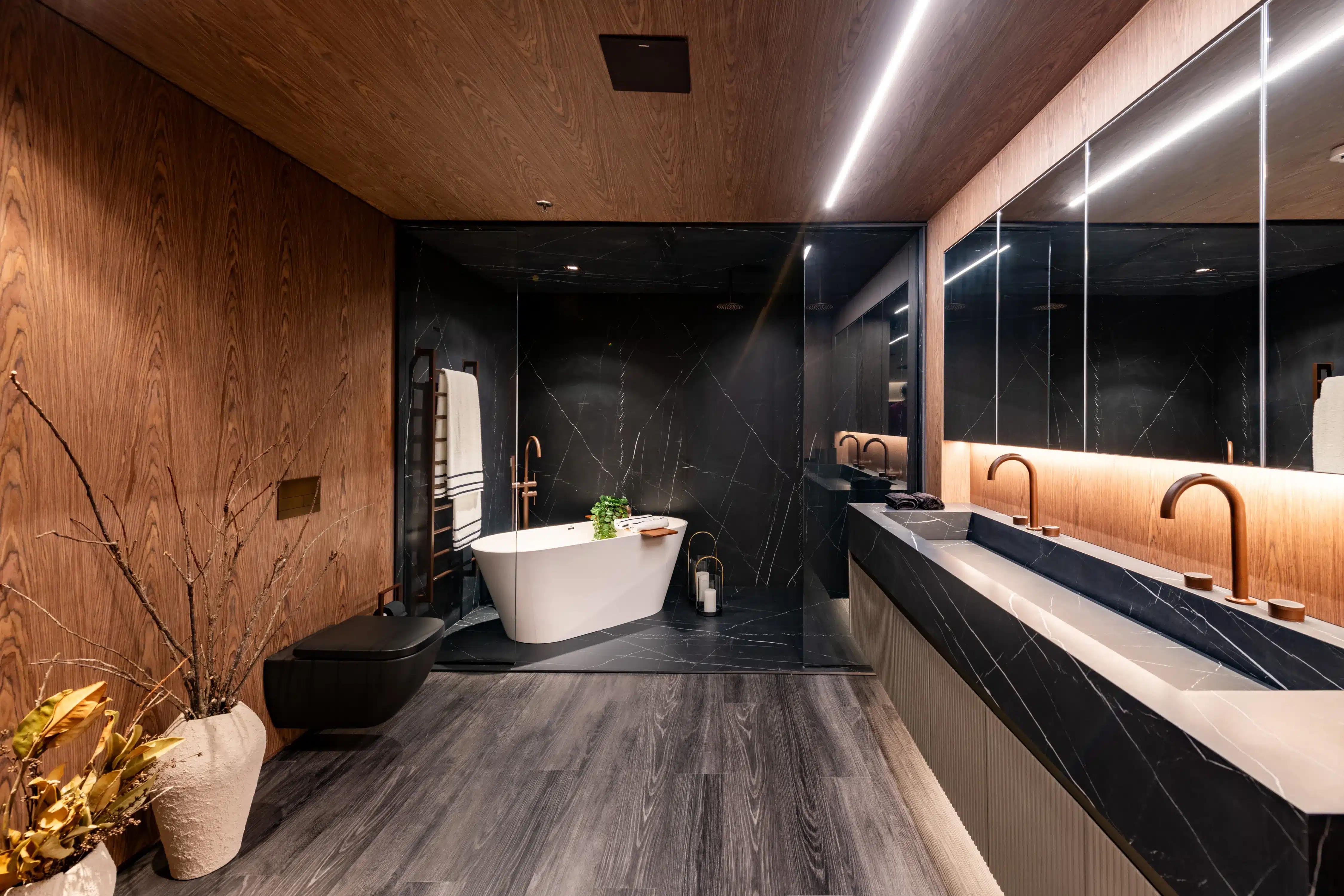
The minimalism 2.0 that dominates this year is neither cold nor impersonal, but organic and functional. Hidden storage solutions, integrated bathroom furniture, and continuous surfaces reduce visual noise and improve the fluidity of the space.
In addition, more and more projects are opting for large-format coverings with minimal or almost imperceptible joints, creating a greater sense of spaciousness and calm. This effect is achieved through continuous panels, integrated countertops, or coverings that envelop the space with consistency.
5. How to introduce color into the bathroom without disrupting the harmony
Although the overall approach is serene, color does not disappear; it is simply used with intention. Applied sparingly on walls, tiles, or unique details, shades such as deep blue, moss green, or terracotta add visual richness without disrupting the overall harmony.
Monochromatic bathrooms remain an elegant option when color is applied evenly and with subtle tonal variations. This strategy creates balanced and coherent spaces from start to finish.
6. Sustainable materials and finishes
Sustainability is no longer an add-on but has become a central criterion in interior design. Durable materials with low environmental impact and natural textures—such as stone, ceramic, or wood treated for humid environments—dominate the most carefully designed projects.
It is not just a question of aesthetics, but also of durability and respect for the environment: finishes designed to age well and withstand daily use without losing their beauty.
7. Personalization and uniqueness
The trends for 2026 do not point to bathrooms that are all the same, but rather to spaces that reflect the personality of those who inhabit them. From textured walls to sculptural pieces or handcrafted details, the key lies in carefully chosen accessories and how these elements interact with the whole.
The result is personal, warm, and unique bathrooms, where every choice has a clear purpose.
The bathrooms of 2026 move away from purely functional design to create environments that excite, welcome, and endure. With natural palettes, tactile materials, continuous surfaces, smart integration, and a sustainable approach, these spaces are conceived as authentic sensory havens.
In short, the bathroom is no longer a utilitarian corner but a room designed for everyday well-being: a space that conveys calm, functions naturally, and accompanies the rhythm of daily life with elegance.
8. Ambient lighting and layers of light
Lighting becomes an essential element of bathroom design. Indirect lighting, backlighting on mirrors, and hidden LED strips create softer, more relaxing environments.