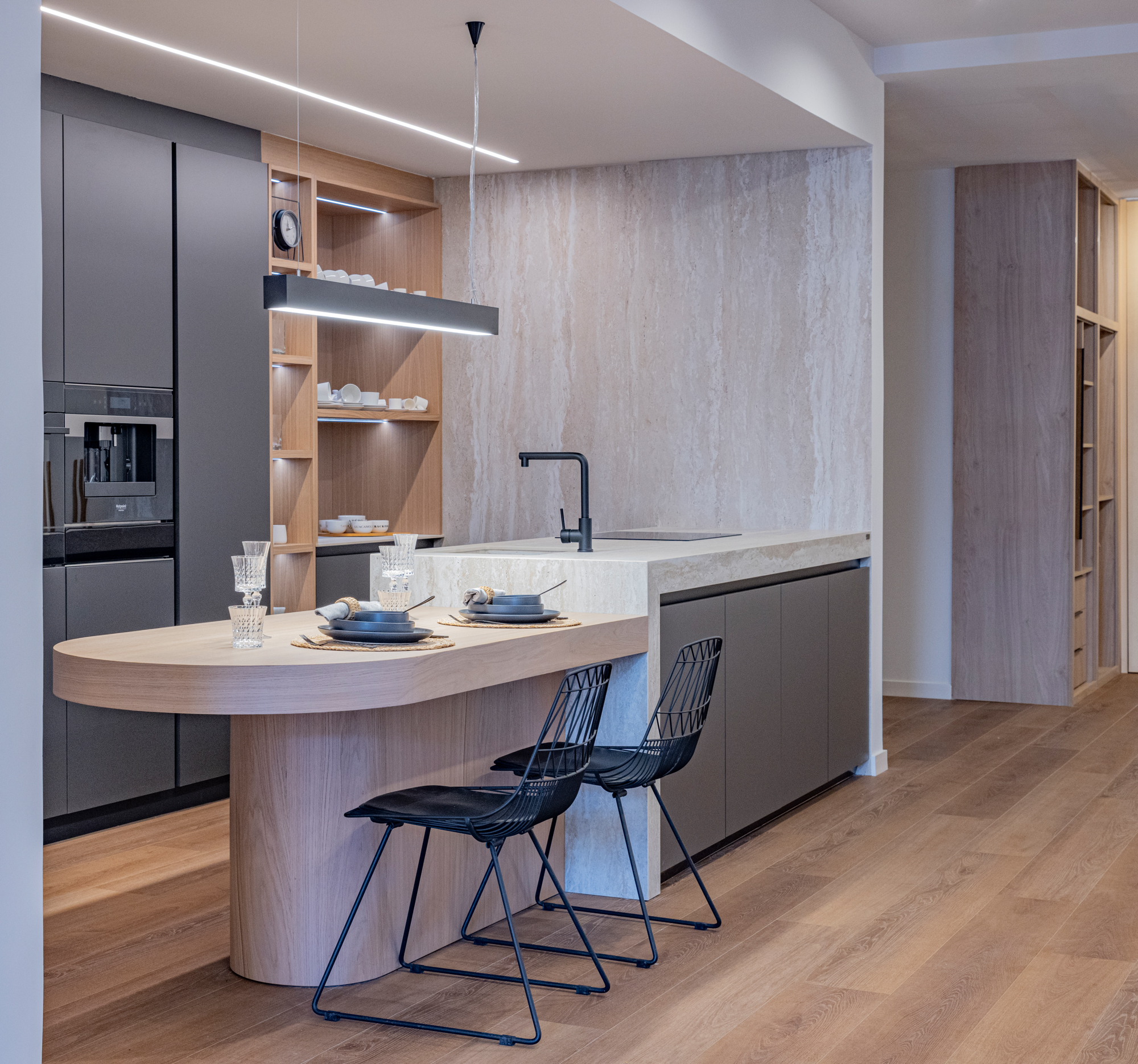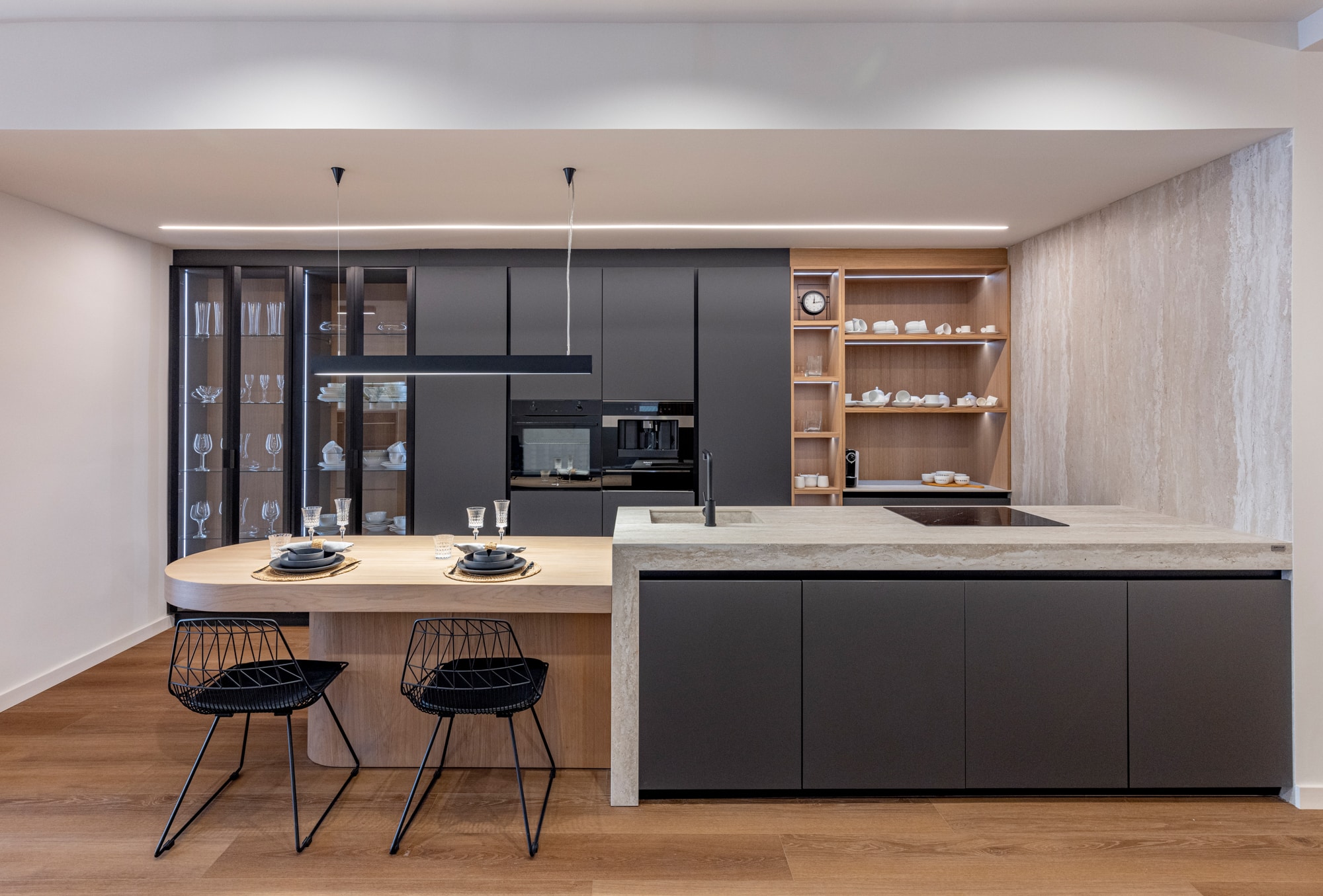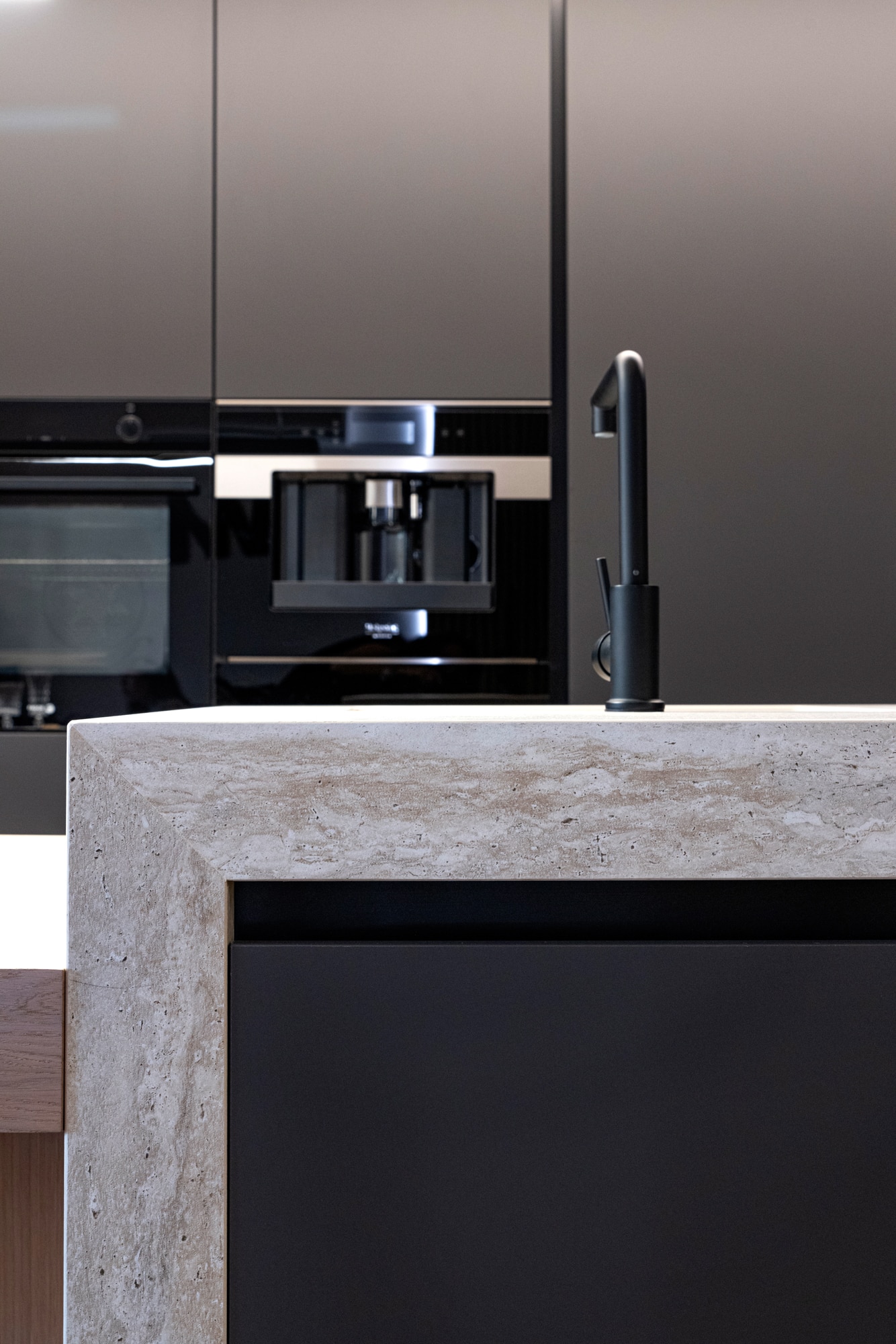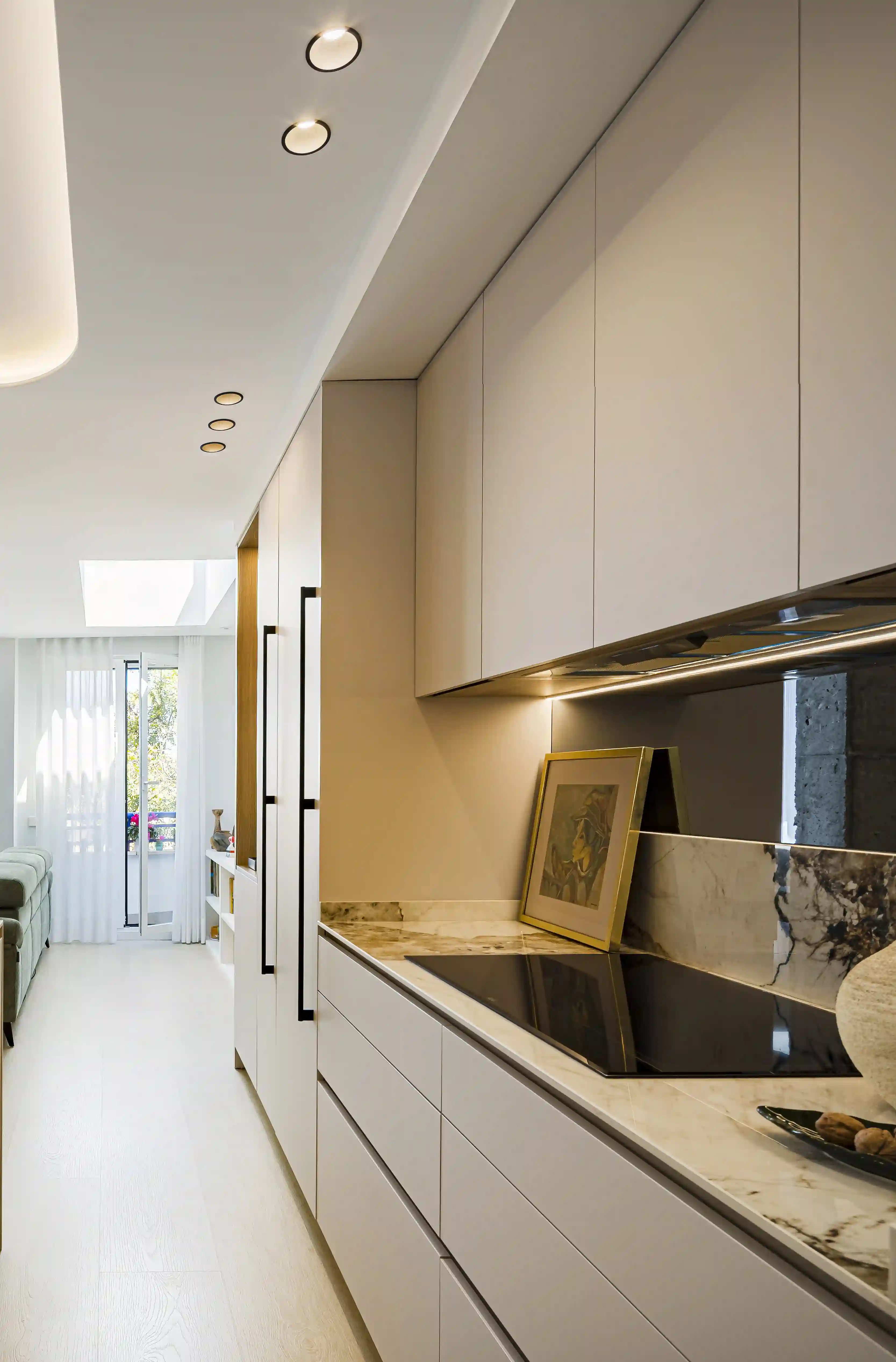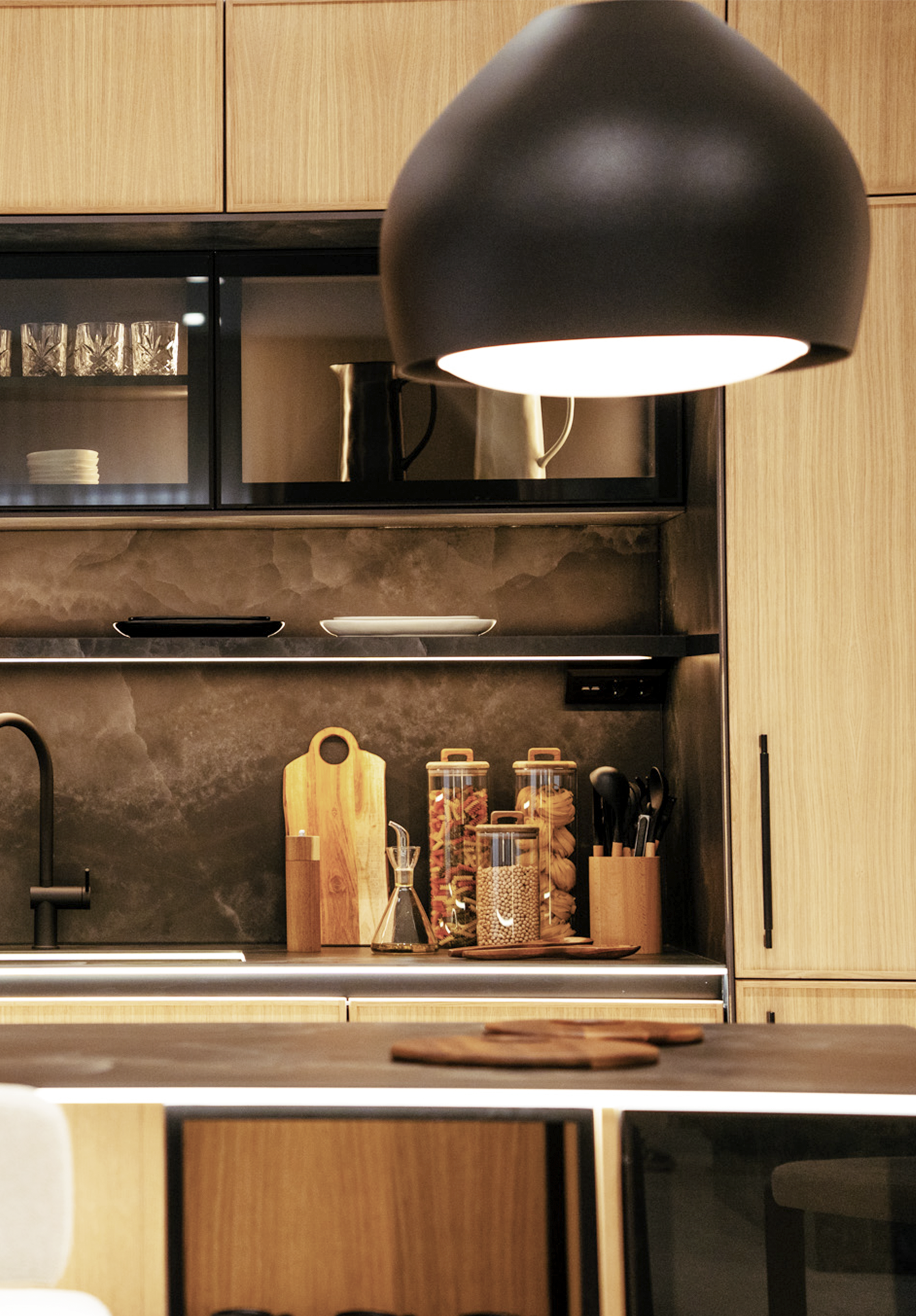

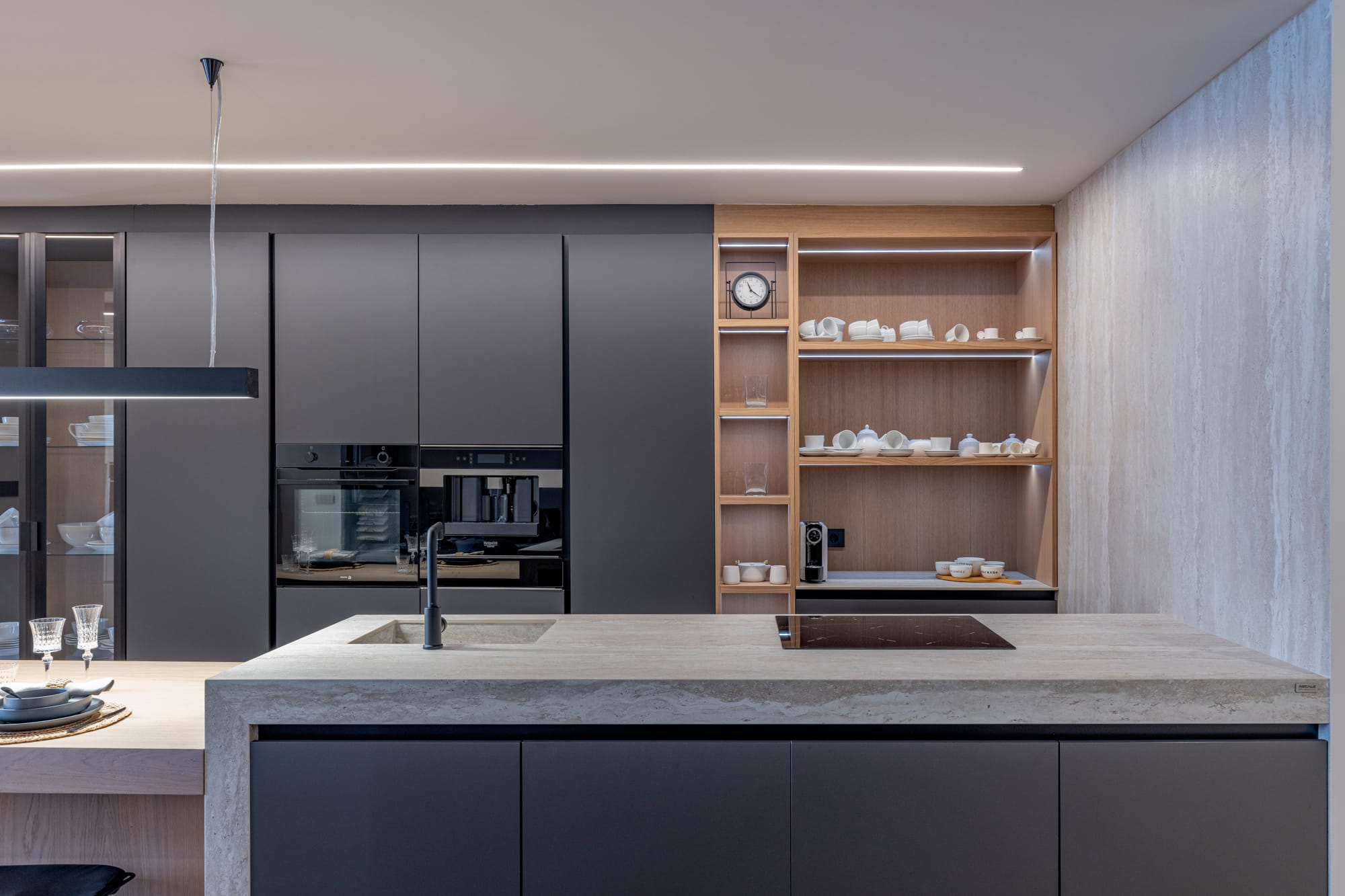
The choice of materials has a direct impact on how we perceive a space. Beyond aesthetics, surfaces, finishes and textures influence the visual spaciousness, brightness, comfort and overall feel of an environment.
In architecture and interior design, materiality has become a key tool for transforming spaces and creating more functional, balanced and emotional experiences.
At Ascale, we see materials as elements capable of defining a project’s identity and completely altering the perception of space.
1. How to make spaces appear more spacious
One of the key effects of materials is their ability to visually expand a space.
Unbroken surfaces, large formats and light colours help to create a sense of spaciousness, order and visual flow. Furthermore, minimising joints and visual breaks makes spaces feel more open and connected.
Conversely, materials that are overly fragmented or feature too much contrast can make a room appear smaller.
2. More light without changing the lighting
The choice of materials also has a direct impact on the brightness of an interior.
Materials that reflect natural light more effectively help to enhance the brightness of a space and create brighter environments without the need for additional artificial lighting.
Soft finishes, balanced surfaces and light colour schemes help to maximise the amount of light entering a space and create a greater sense of well-being.
3. Continuity between indoors and outdoors
The integration of indoor and outdoor spaces is one of the major trends in contemporary architecture today.
Using consistent materials in both areas creates visual continuity, a sense of spaciousness and a more natural connection with the surroundings.
This continuity helps to create more harmonious and fluid designs, particularly in homes and open-plan spaces where architecture and interior design aim to coexist without visual interruptions.
4. Visual order and aesthetic balance
Materials also influence the perception of order within a space.
Clean surfaces, balanced textures and coherent colour schemes convey a sense of calm, sophistication and visual harmony.
Conversely, an excess of textures, colours or contrasts can create visual clutter and distraction, affecting the user’s experience within the space.
5. The thermal perception of materials
The perceived temperature does not depend solely on the actual temperature. Materials also influence how we perceive a space on a sensory level.
Warm tones, natural textures and matt finishes tend to create more welcoming and comfortable atmospheres. Conversely, dark, metallic or highly reflective surfaces convey a cooler, more minimalist aesthetic.
The choice of materials can therefore help to reinforce the emotional character of the project.
6. How materials affect the perceived height
The choice of materials can visually alter architectural proportions.
Vertical cladding, continuous surfaces and large-format tiles help to streamline spaces and enhance the sense of height.
This approach is particularly useful in interior design projects where the aim is to maximise the perception of space without making structural alterations.
7. The prominence of materials in contemporary design
Nowadays, materials no longer serve merely a technical or decorative purpose. They have become central to contemporary architectural and interior design.
Surfaces define atmospheres, convey emotions and help to create spaces with their own distinct identity.
At Ascale, innovation, design and materiality come together to create surfaces capable of transforming the perception of space and adding architectural value to every project.